박인성의 ‘스캔그래피’가 그려내는 변화(變化)와 심화(心畫)에 대하여
정 빈 나 / 성균관대학교 동양철학과 강사, 철학박사
박인성 작가(이하 이름)의 작업은 스스로 밝히듯이 독일에서 만난 아날로그 필름에서 출발한다. 그가 찾아낸 나치 선전 영화의 아날로그 필름은 ‘다큐멘터리’라는 이름 아래 진실과 거짓을 뒤바꿔 꾸며놓은 영상으로 가득 차 있었다. 아날로그 필름과의 조우에서 박인성이 깨달은 점은 무엇인가? 다큐멘터리는 사건에 대한 객관적인 기록을 표방하며 만들어지지만 촬영하는 사람의 의도와 주관을 따라 고정된 현상의 일부분을 보여줄 뿐 그 이상을 보여주지는 않는다. 그리고 촬영하는 사람에 따라서는 현상을 조각내고 오려붙여 보는 이들로 하여금 전의(戰意)를 불러일으키도록 만들기도 한다. 다큐멘터리 속 현상은 이미 사태가 발생한 당시의 모습과 멀어져 있을 뿐 아니라 파편화되어 있고, 그 영상을 보는 이들은 사태의 파편들을 보며 일어난 감정이 사태 전체에 대해 맞갖을 만하다고 믿는다.
예컨대 나치 시대 영화감독 레니 리펜슈탈(Leni Riefenstahl, 1902~2003)이 우수한 게르만 민족이 위대한 영도자 아래 잠을 깨어 일어나고 있다는 테마 아래 제작한 다큐멘터리 <의지의 승리(Triumph des willens)>에는 일방적인 선전과 맹목적인 열광만을 고정시켜 담아낼 뿐 똑같은 시간 다하우(Dachau) 수용소에서 무슨 일이 벌어지고 있는지는 보여주지 않는다. <의지의 승리>에 열광하던 군중들은 얼마 지나지 않아 그들의 문화를 대표하는 문호들의 책을 똑같은 열광 아래 불태웠고, 유태인을 향한 대규모 포그롬(Pogrom, 유태인을 향한 조직적 약탈과 상해를 뜻하는 러시아어)이었던 ‘수정의 밤’사건을 똑같은 강도의 열광 아래 일으켰다. 시간이 흘러 이들의 열광이 가시고 나서야 오도된 열광의 세월을 그려내는 다큐멘터리들이 ‘역사적 반성’이란 이름 아래 무수히 제작되었지만, 이미 한 시대를 광기로 채색한 다큐멘터리의 후과가 지워지지는 않았다.
사실을 그려낸다는 다큐멘터리가 그 자체로 진실을 가로막는 거대한 거짓이 될 수 있다면, 그 다큐멘터리를 시청한 화가가 착수해야 할 작업은 무엇인가? 박인성은 현상을 조각내고 오려붙여 만든 다큐멘터리를 담아내는 필름이라는 매체를 조각내고 오려붙이는 작업에 착수했다. 먼저 그는 아날로그 카메라로 사진을 찍되 형상이 파악되지 않는 사진 또는 무엇을 담고 있는지 확대해야 알 수 있는 사진들을 만들어낸다. 그리고는 그런 사진들을 현상해 평판 스캐너에 놓고, 서로 상반되어 보이는 이미지의 필름들을 조각내어 오려붙이거나 혹은 필름 위에 산성용액을 뿌린다. 10분에서 12분 정도 시간이 지나면 산성용액과 필름 사이에 발생하는 화학작용으로 인해 필름이 녹아내린다. 필름은 녹아내리면서 우연에 우연을 더해 천변만화(千變萬化)의 이미지를 만들어낸다. 그렇게 만들어진 이미지들 가운데 마음에 드는 이미지가 나올 때까지 여러 번 스캔을 한다.
이렇게 만들어진 결과물에는 작업이 시작될 때의 원본이 가졌던 ― 사실 이 작업에 어떤 원본성이 전제되어 있다고 말할 수 있을지 모르겠지만 ― 모습이나 아우라가 소거되고, 원본으로부터 멀어지면서 탄생하는 새로운 이미지들이 거듭된다. 이때 출현하는 이미지들은 불교에서 말하는‘색즉시공(色卽是空) 공즉시색(空卽是色)’의 의미를 연상시키는 성격을 띤다. 눈에 보이는 세계인 색은 그 자체의 변함없는 성격을 갖지 않고 오직 다른 사물과의 관계에 의존해 나타나고 사라지기를 반복하기에 공이다. 예를 들어 얼음이 녹으면 물이 되고 물을 끓이면 기화되어 수증기로 변하지만 H2O라는 분자의 결합은 고정되어 있지 않고 계속 변한다. 얼음의 모양도, 물의 모양도, 수증기의 모양도 모두 사라지기에 공이며, 또한 변화하는 가운데 끊임없이 모양을 바꿔 다시 나타나기에 색이다. 마찬가지로 박인성의 작업 속에서 만들어지는 이미지들 역시 고정된(다큐멘터리 필름이 가지는 고정성!) 이미지가 없으며, 오직 필름과 용액 사이의 화학작용 가운데 나타나고 사라지기를 반복한다.
이렇게 색이 공이 되고 공이 색이 되는 박인성의 필름 위에서 현실을 고정시켜 재단할 수 있다는 다큐멘터리의 믿음은 의미 없는 것이 된다. 이런 자신의 작업을 일컬어 박인성은 ‘스캔그래피(Scan-Graphy)’라는 이름을 붙이는데, 이는 이미 미술계에 존재하는 ‘스캐노그래피(Scanography)’와는 다른 의미를 품고 있다. ‘스캐노그래피’는 이미 사진이라는 매체를 통해 고정된 현상만을 조작해 2차적 화면을 도출할 뿐이기에 다큐멘터리와 본질적으로 다르지 않다. 그러나 ‘스캔그래피’는 고정되지 않고 고정될 수도 없는 변화 자체를 필름에서 만들어내고 그 변화를 다시 스캔으로 담아낸다. 여기서 그치지 않고 박인성은 변화에 다시 변화를 더하는 작업을 시도한다. ‘스캔그래피’의 결과물은 고정되지 않은 변화를 포착해내는 성격을 띠고 있지만, 아무리 필름을 통해 수많은 변화와 이미지를 만들어도 프린트라는 과정을 거친 평면화는 피할 수 없기 때문이다. 그는 평면에 드러난 이미지는 아무리 변화무쌍해도 단지 시각적 평면이며 가상일 뿐 손에 잡히고 느껴지는 삶의 입체성과 구체성의 무게는 담지 못한다고 본다.
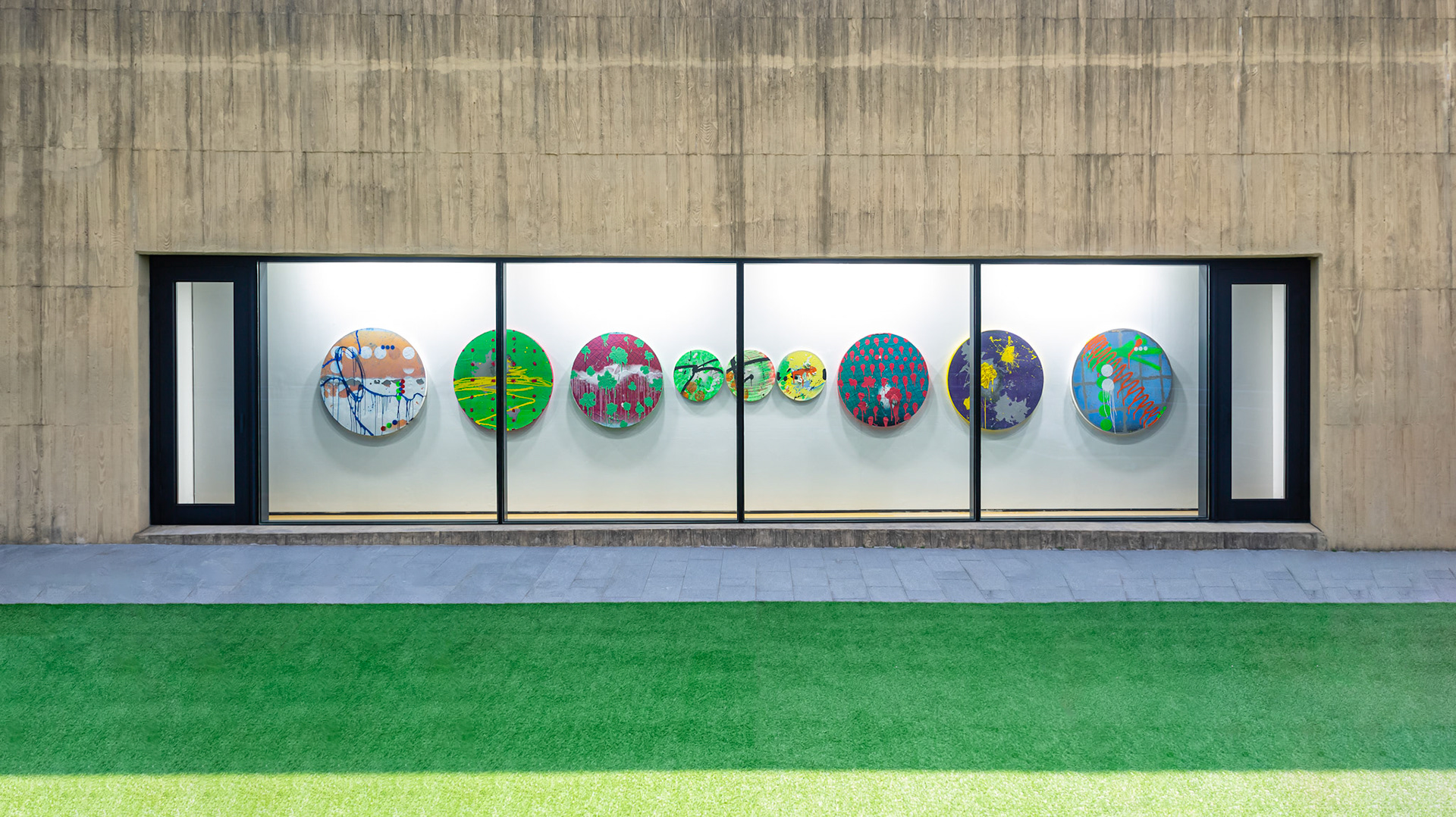
이 때문에 마치 피카소가 그랬듯이, 박인성은 입체성과 구체성을 평면에 구현하려 한다. 동시에 자기 작업의 핵심에 있는 ‘비고정성’을 유지하기를 도모한다. 이를 위해 그는 에폭시 레진과 아크릴 물감과 같은 소재를 동원한다. 특히 주목할 소재는 레진이다. 사실 레진은 우리가 사용하는 모니터와 핸드폰 화면의 재료이다. 박인성의 의도는 화면을 만드는 레진까지도 고정성과 결정성에서 탈피시키는 데 있다. 화면이란 우리로 하여금 사실에 닿지 못하게 하는 일종의 차단막이 되기 때문이다. 다큐멘터리를 비롯해 어떤 영상이든 우리는 영상 안에 담긴 대상과 사건을 그대로 보는 것이 아니라 레진으로 만들어진 화면에 비친 모습을 볼 뿐이다. 박인성은 오늘날의 인류는 매체에 너무 많이 의존하는 시대로 들어섰고 사람에게 직접 듣는 것보다 영상매체의 화면 즉 레진 뒤편에서 전해진 영상과 소리에 더 귀를 기울인다고(Simon&Garfunkel의 ‘Sound of Silence’처럼) 역설한다. 레진 속 영상에 집착하면 할수록 유튜브는 더 많은 영상을 입맛대로 가져다주고, 입맛대로 보는 영상들이 쌓일수록 시청자는 자기 입맛대로 만들어낸 세계에 완전히 고정되어 자기 세계 바깥으로 나가지 못하는 자폐성을 띠게 된다.
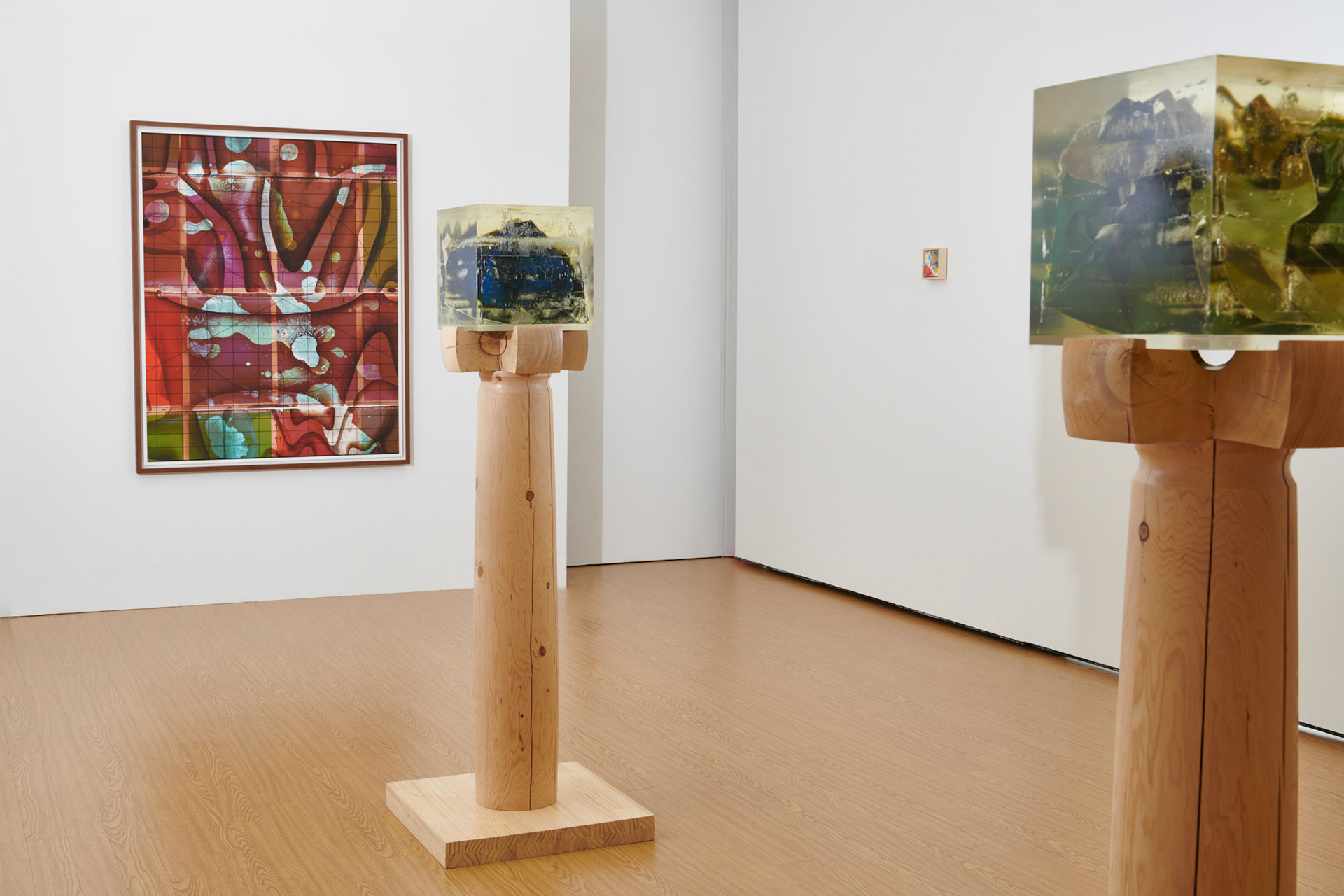
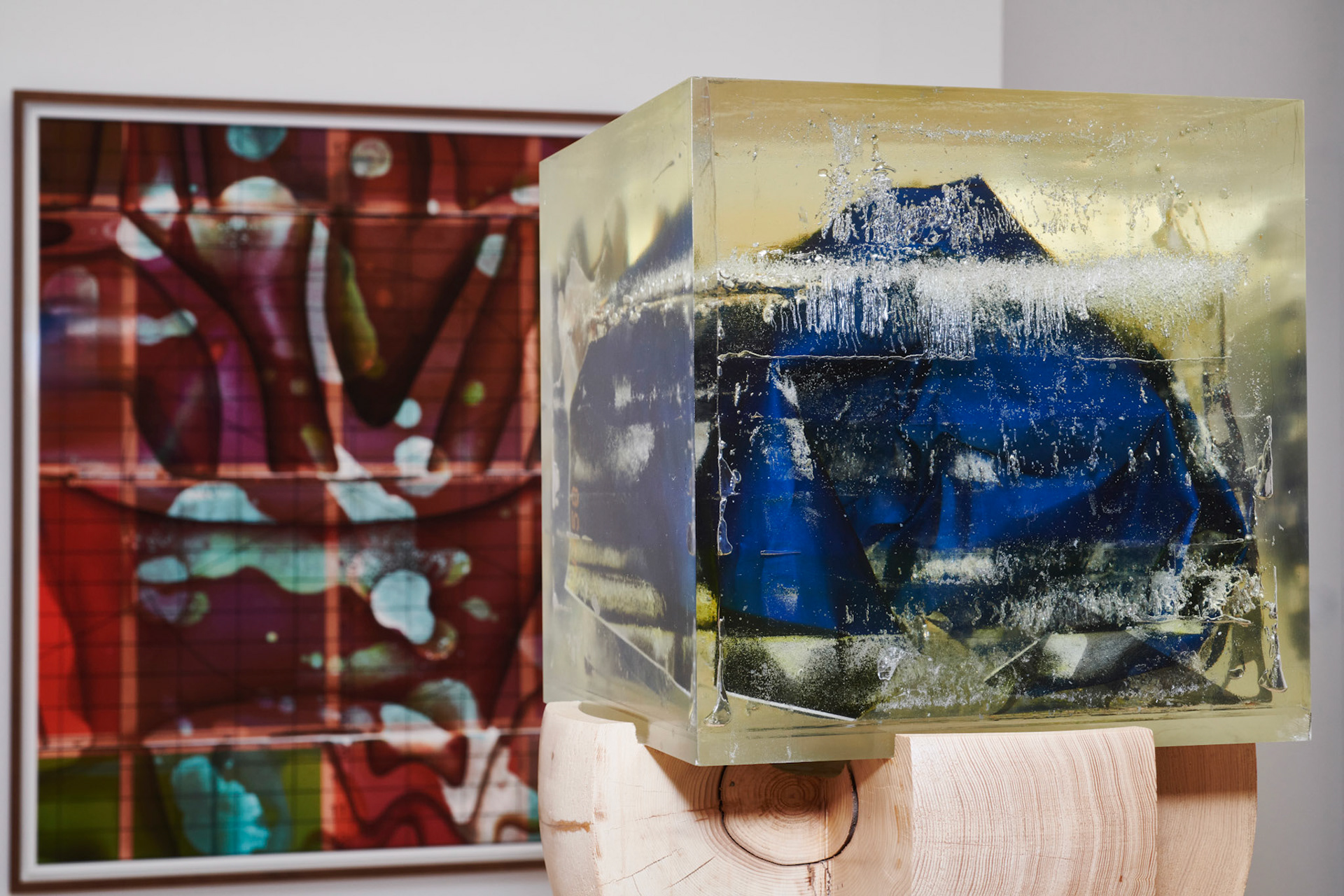
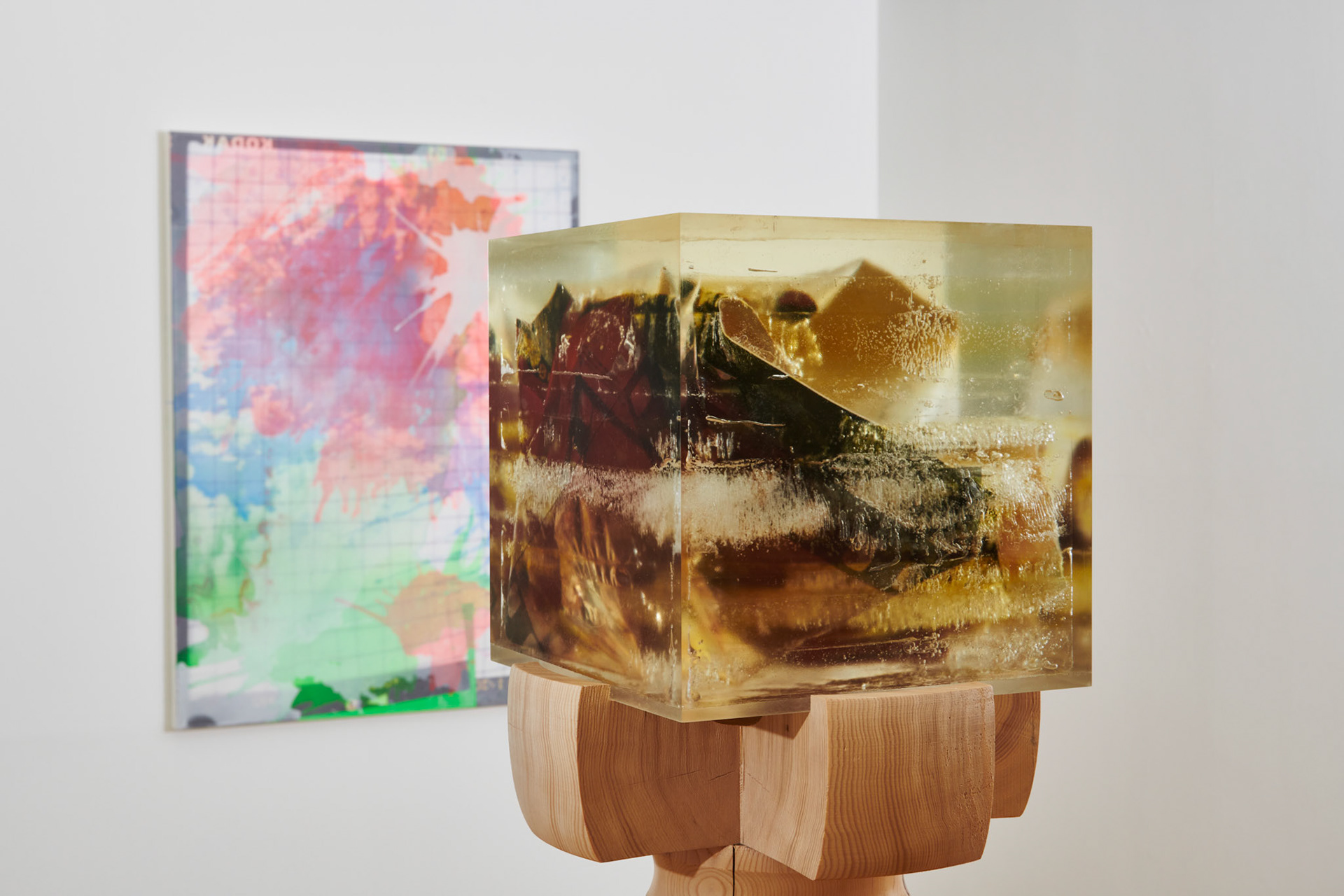
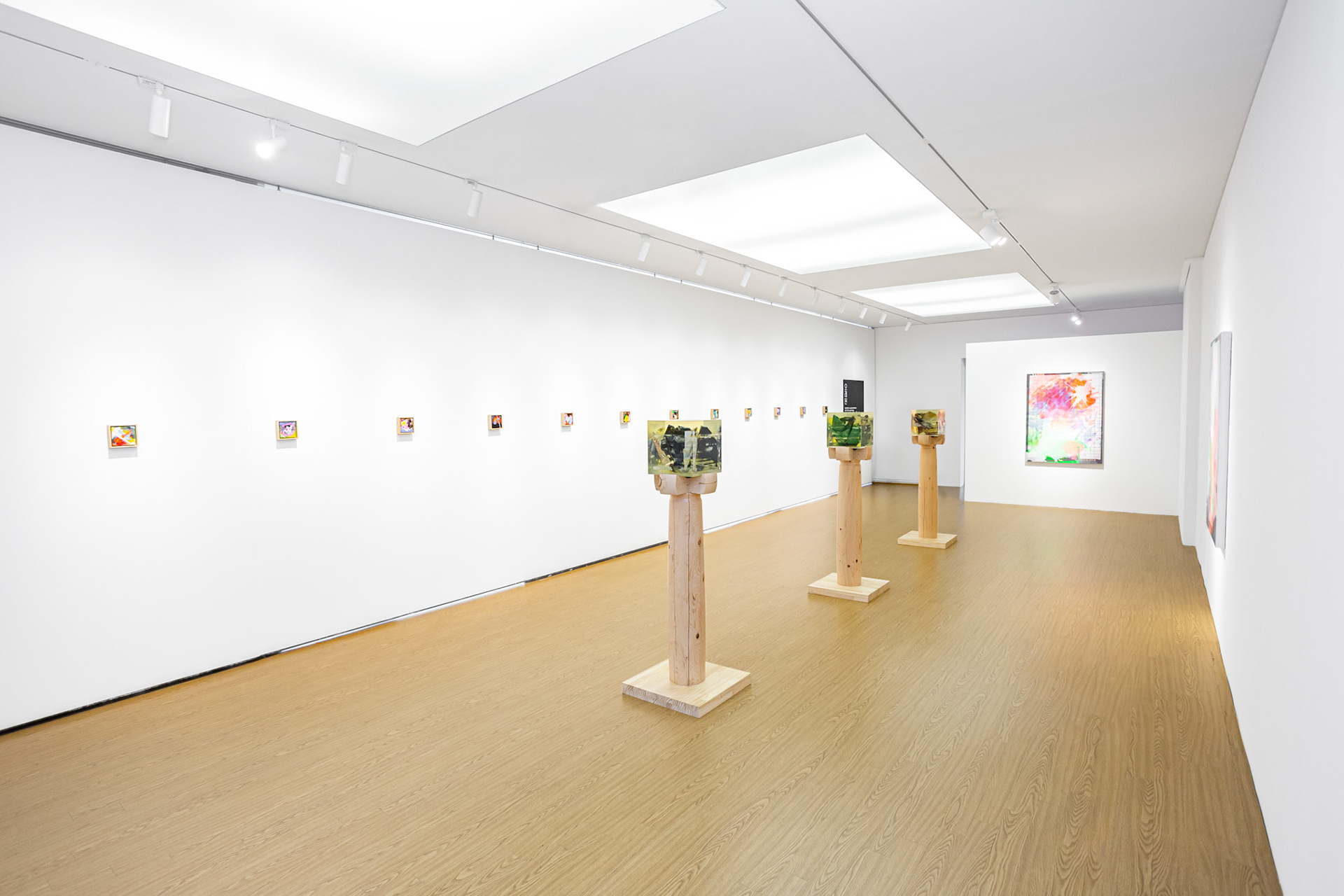
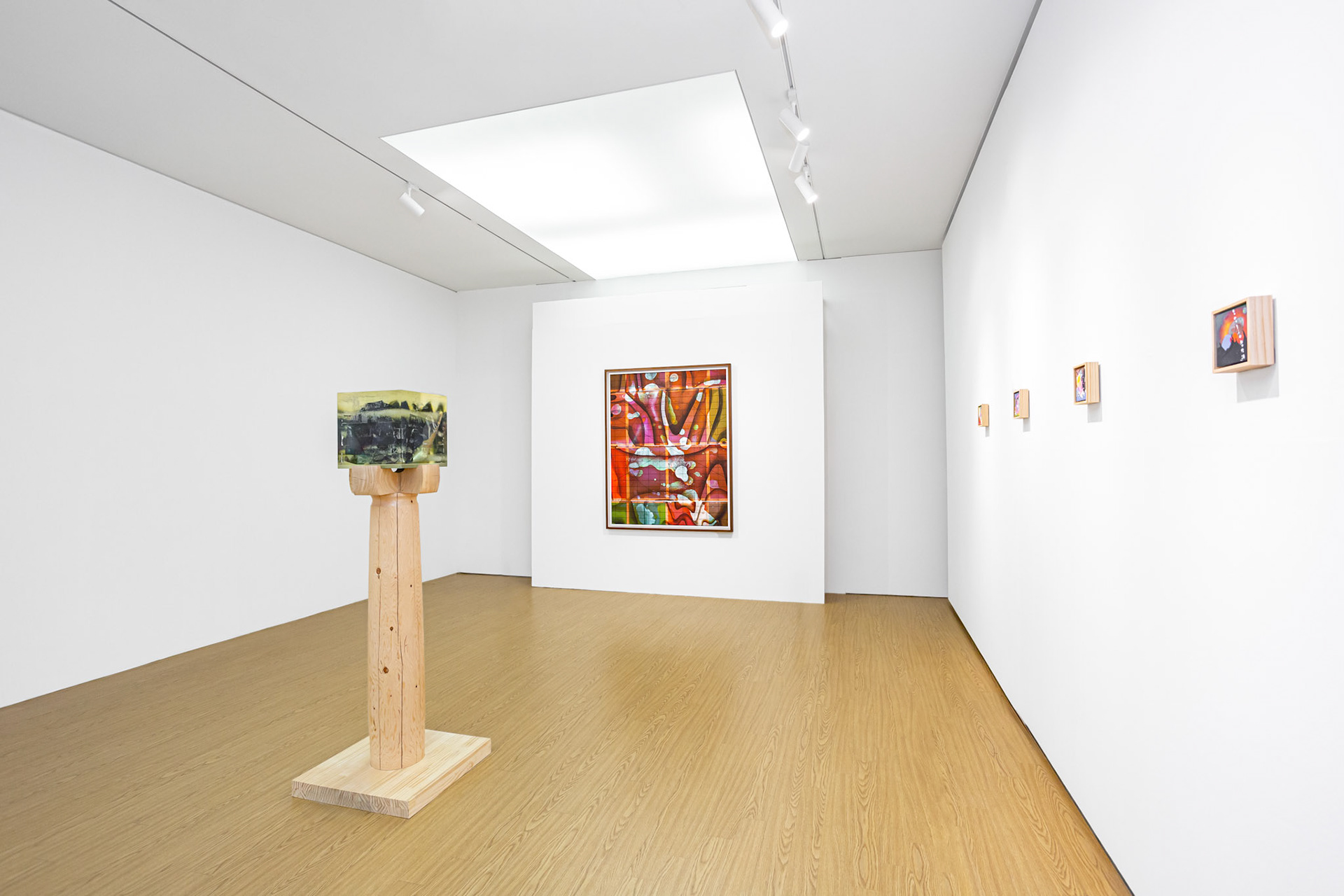
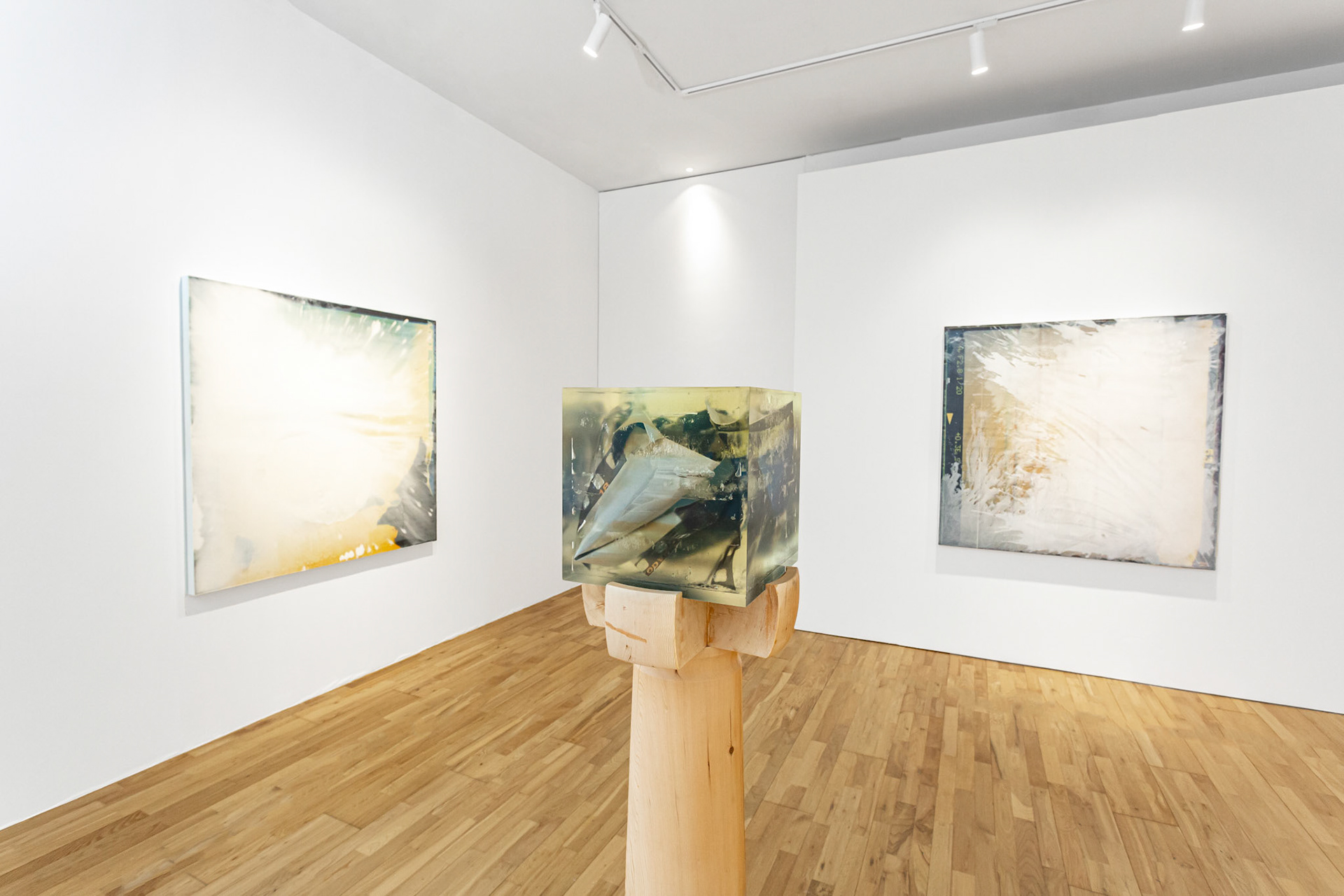
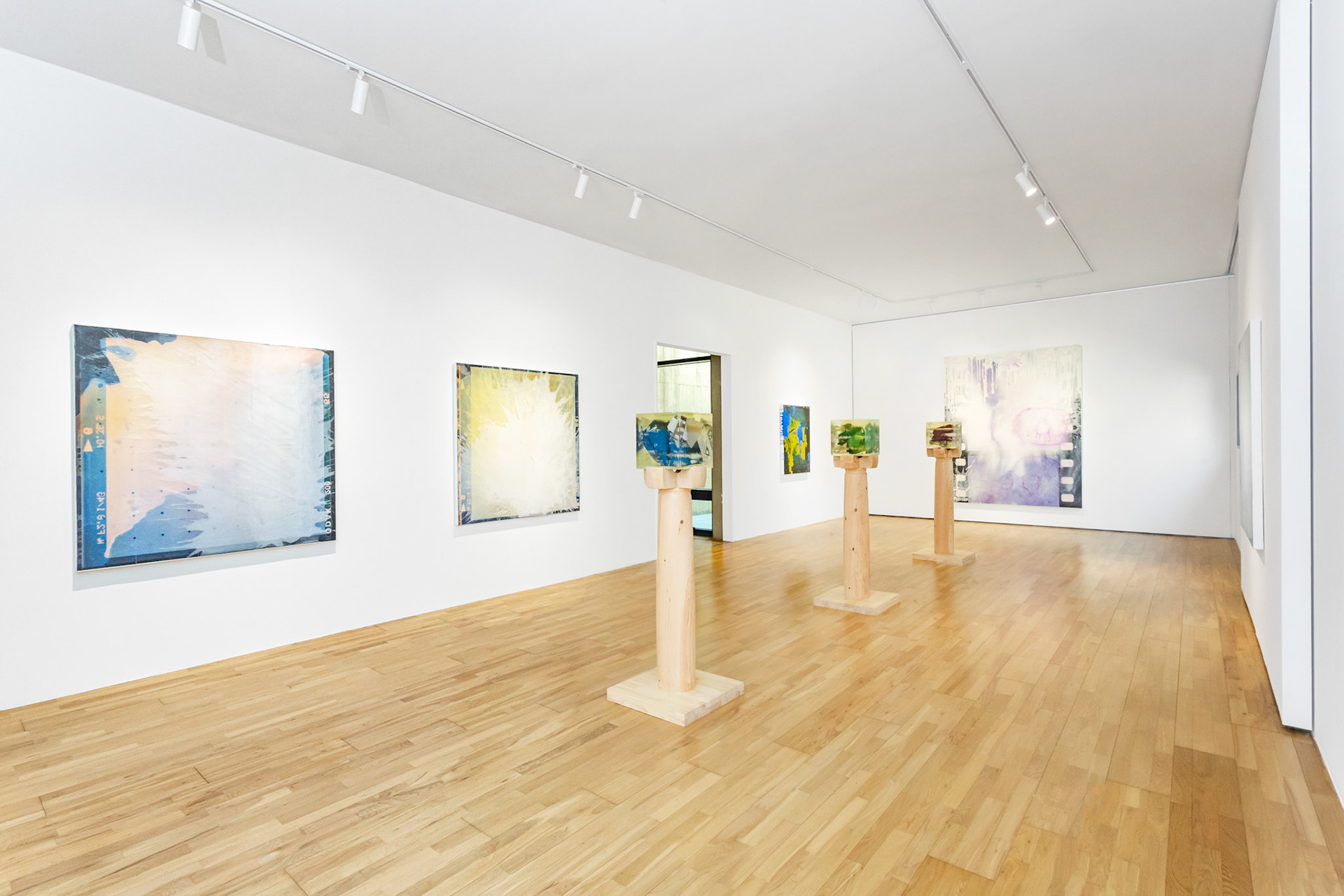
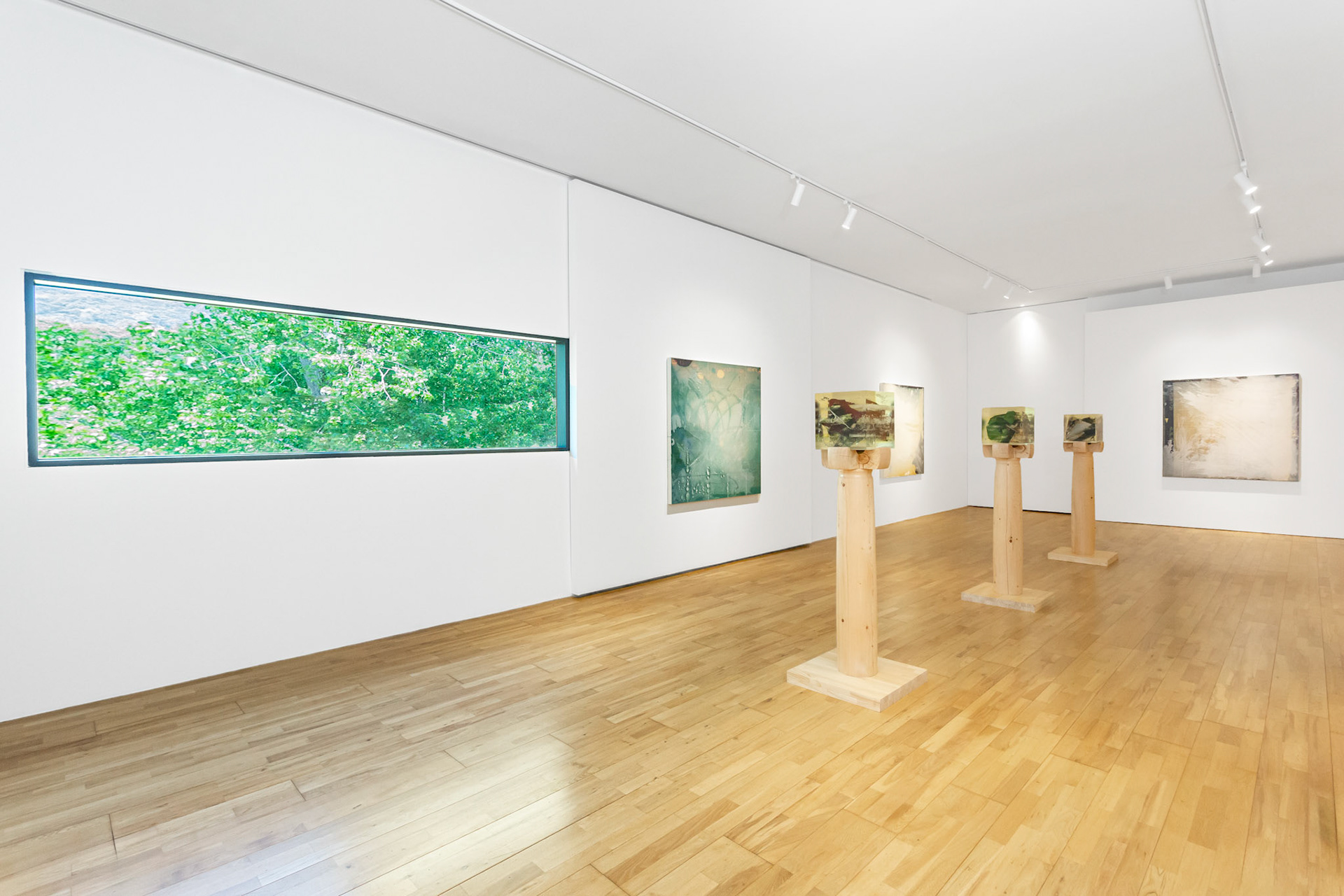
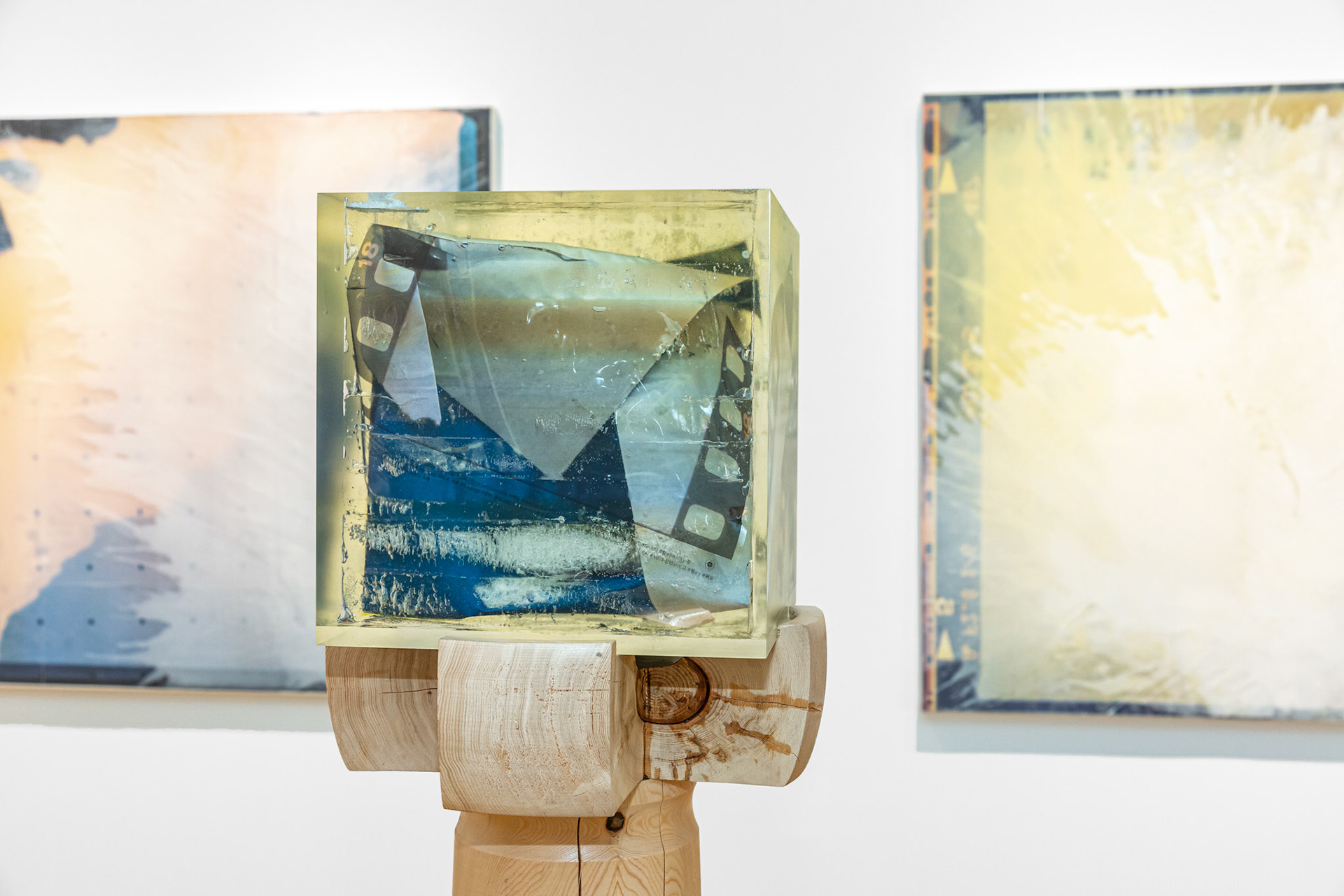
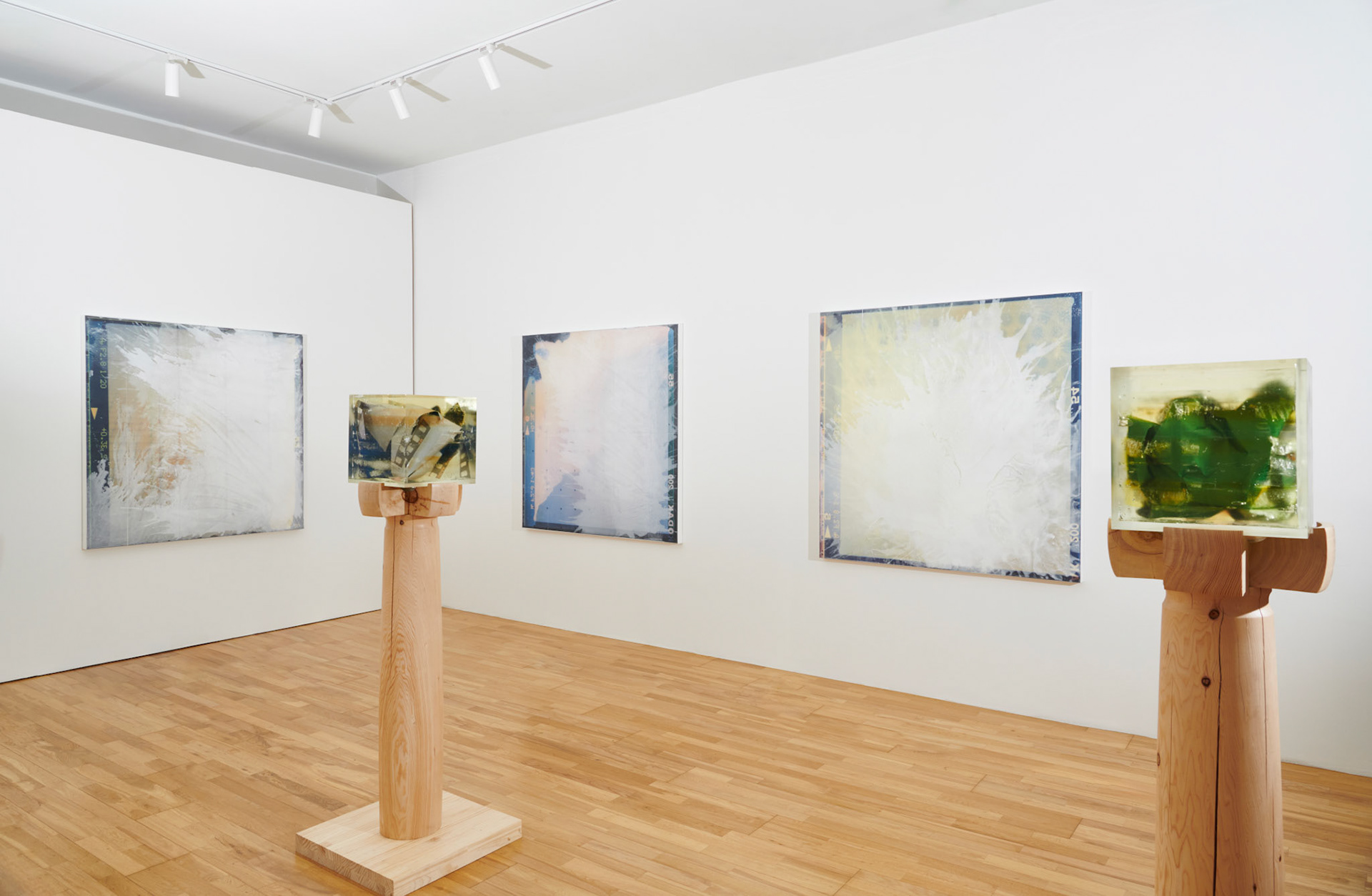
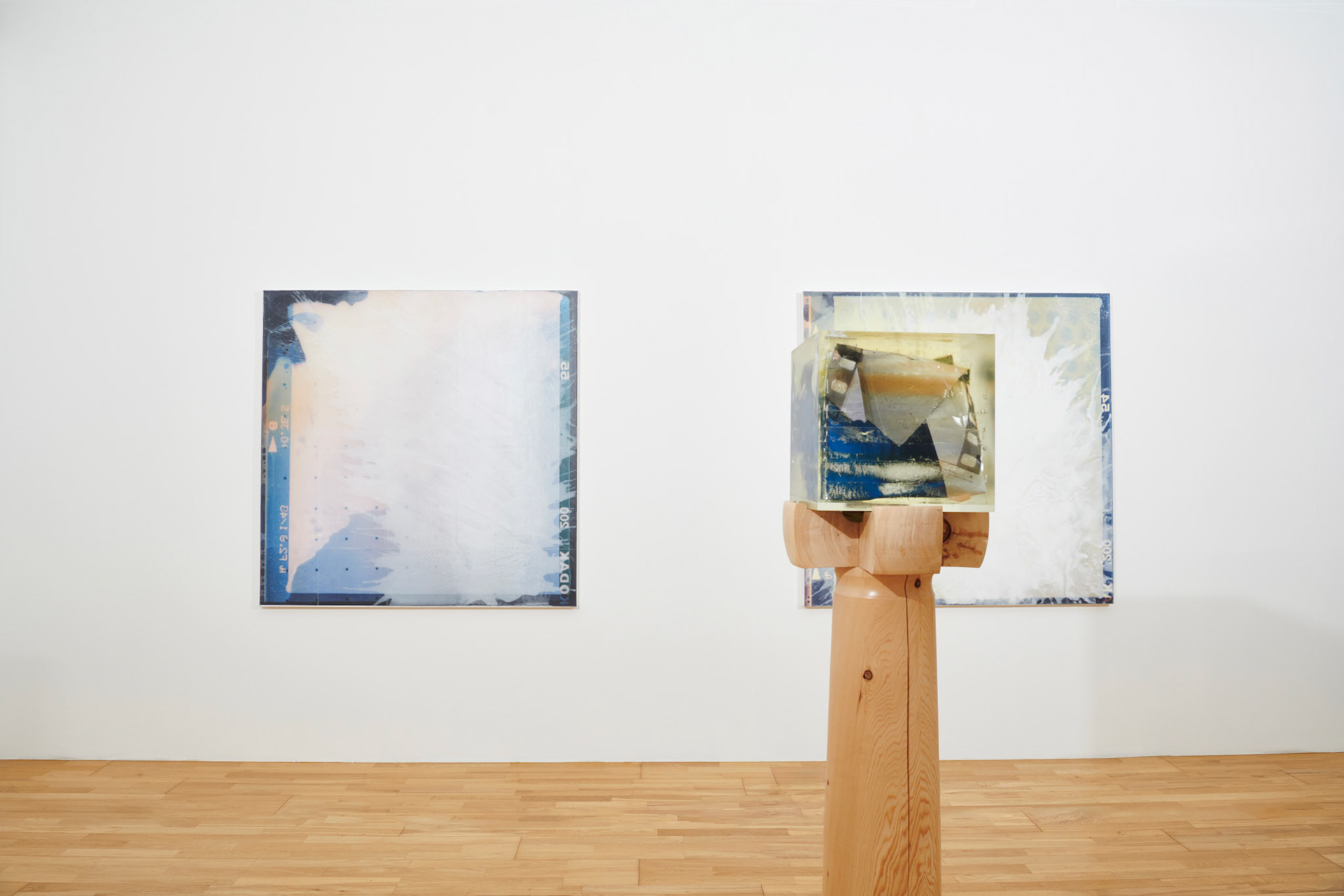
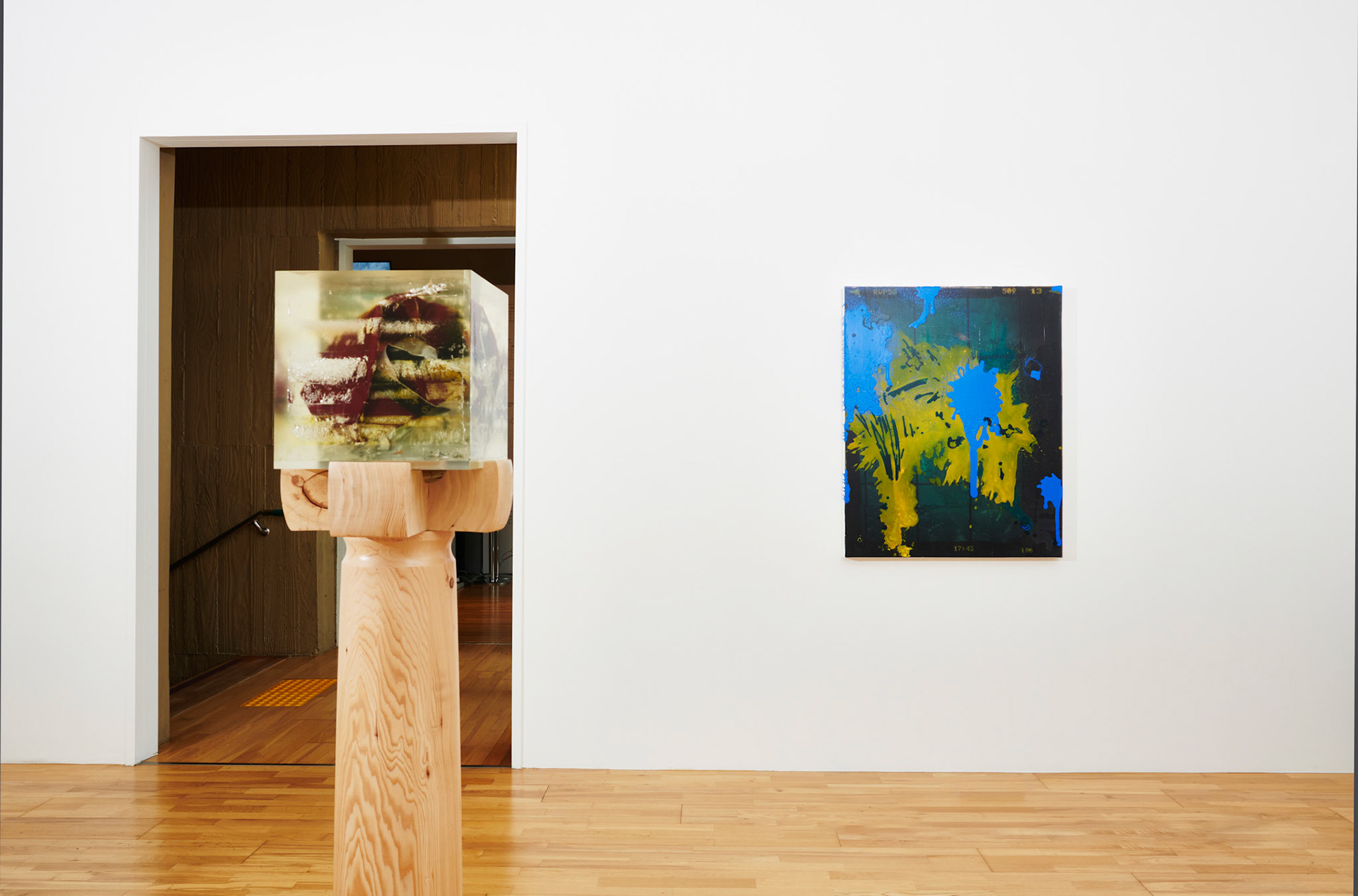
이토록 강고한 화면의 고정성을 타파하기 위해 그는 스캔그래피 작업에 에폭시 레진과 아크릴 물감 등의 재료를 결합시킨다. 조각난 사진들을 붙이고 용액을 뿌리면서 만들어진 일그러짐이 담긴 새로운 사진 위에 에폭시 레진과 아크릴 물감으로 레이어를 만든다. 필름 조합 위에 레진을 붓고 아크릴 물감을 뿌리거나 필름 위 먼지들을 붙이면 0.1 ~ 0.3 밀리미터 정도의 두께감이 생기면서 그 아래 깔린 원본과의 갭(Gap)이 생기는데, 이렇게 프린트된 스캔 위에 레진과 물감을 중첩시켜 만드는 갭으로 인해 조명과 작품의 위치, 그림자에 따라 다른 색깔과 빛깔을 낳는 효과가 생긴다.
레진과 물감이 만들어내는 효과에 대해 박인성은 ‘사건’과 ‘해석’이라는 설명을 더한다. 이는 앞서 소개한 다큐멘터리의 성격과도 닿아 있다. 다큐멘터리에 대한 신뢰가 붕괴되는 지점은 다큐멘터리가 사실을 담보하지 않는다는 데 있다. 우리는 다큐멘터리를 통해 사실을 본다고 생각하지만 이는 다큐멘터리가 다 담아낼 수 없다. 다큐멘터리는 촬영자와 제작자를 비롯해 여러 의도와 여러 작업을 거치면서 여과되기 때문이다. 그래서 다큐멘터리를 통해 볼 수 있는 것은 파편으로 떨어져 나온 사건일 뿐이고, 파편들을 어떻게 해석할지에 대한 책무는 각자에게 부여되어 있다. 이 점에 비춰 보면 박인성의 작업들이 가진 성격이 보다 분명해진다. 그의 작업은 이처럼 모든 고정성을 파괴하는 성격을 띠는 동시에 고정되지 않고 끊임없이 연속되는 사건을 우리에게 보여준다. 필름과 용액과 스캔과 레진과 아크릴이라는 여러 소재들이 결합 되면서 발생하는 예측 불가능한 사건들에다, 전시 위치와 조명과 그림자와 더불어 관람자의 심상과 안목을 추가하여 발생하는 변화들까지 추가하면 사건의 폭은 무한대로까지 넓어지는 것이다.
이렇듯 ‘스캔그래피’를 비롯해 박인성이 수행해 온 작업들은 파편을 전체인 양 보여주며 시청자들을 오도하는 다큐멘터리 필름에 대한 일종의 조롱인 한편, 현상의 인식과 실체적 진실 사이에 존재한다고 여겨지는 괴리를 무화(無化)시키는 작업이기도 하다. ‘무화’시킨다고 함은 박인성의 작업들이 다큐멘터리의 객관성에 대한 문제 제기를 넘어 보다 근본적인 차원에서 필름과 회화의 의미를 묻는 한편 나아가서는 우리의 시각을 필름을 조각내 재구성한 화면 너머를 건너 우리의 의식 깊은 곳으로 돌려놓기 때문이다. 19세기에 필름이 발명된 이래 필름이란 사진기에서 렌즈에 비춰진 피사체를 비춰 인화지에 담아내는 수단이었다. 그러나 필름들을 통해 우리는 피사체의 실상을 잡아냈다고 할 수 있을까? 박인성의 작업들은 필름이 찍힌 피사체 대신 필름이라는 지평 너머에 있는, 피사체 배후에서 일렁이는 보이지 않는 세계로의 진입을 추구하는 것처럼 보인다.
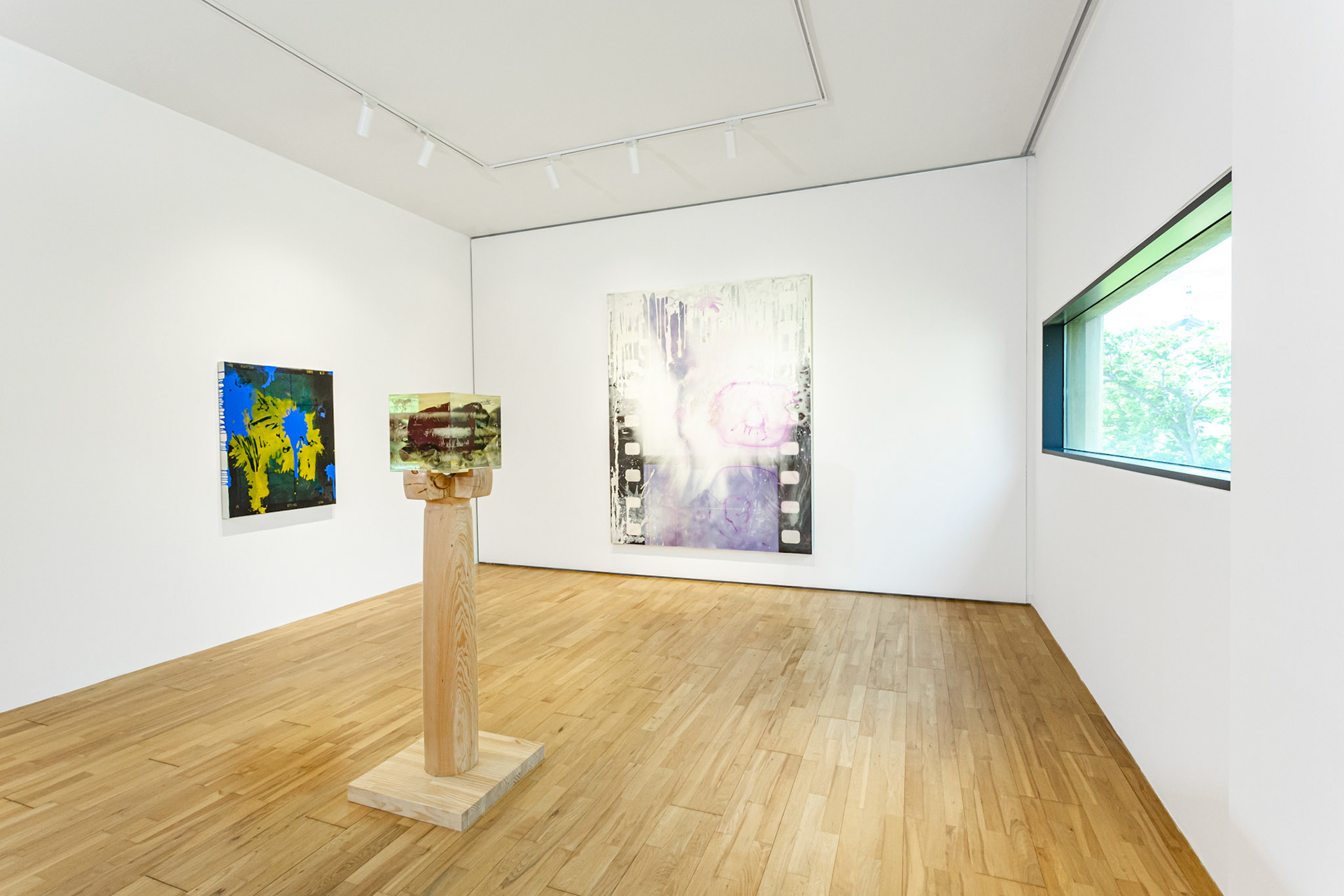
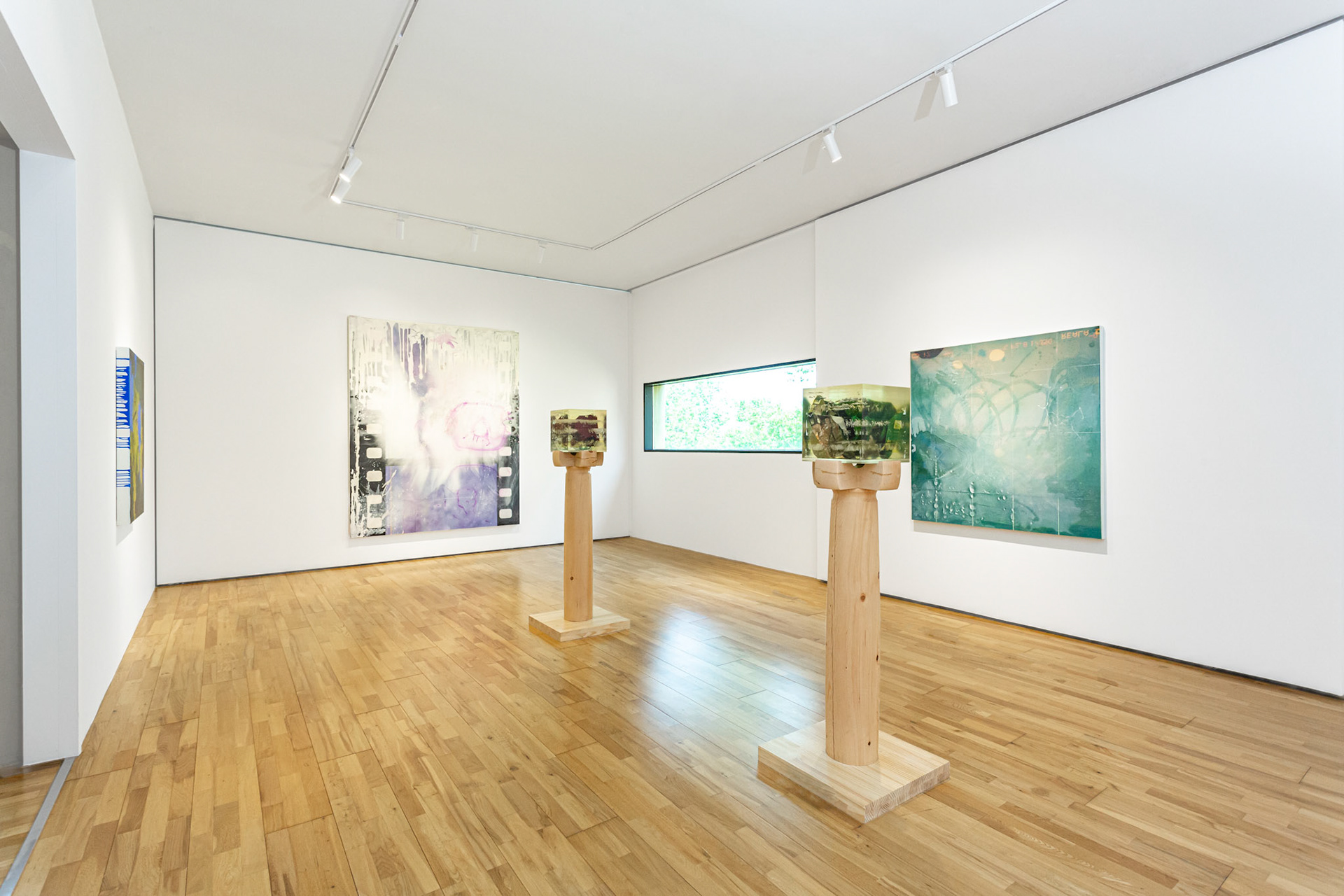
박인성의 작업들에 대해 지금까지 살펴보았듯이, 그는 필름에 빛과 색을 입힌 다음 오리고 붙여서 다시 촬영하여 ‘스캔그래피’로 불리는 작품들을 만들어냈다. 그렇게 만들어진 ‘필름’연작들 속에서 일렁이는 짙푸르다 못해 어두움으로 향하는 빛깔들과 청록색 극광(極光)이 하늘 끝에서 끝까지 달리는 듯한 화면 속에서, 세계의 모습은 도덕경에서 말하는 ‘현(玄)’의 세계인 듯 잡히지 않으면서도 깊어지고, 관객들은 그 깊이를 들여다보려 더 깊은 눈길을 주게 된다. 이때 필름은 피사체를 피상적으로 재현하는 수단이 아니라 피사체 너머에서 일렁이는 작가와 관객의 감정과 사유의 깊은 바닥으로 향한다. 관객들은 박인성이 필름 위에 펼쳐놓은 변화무쌍한 이미지들 위에 자신의 의식 속에 일어나는 변화들과 그 밑바닥에 깔려 있는 자신의 심상을 겹쳐놓을 수 있다.
이는 회화의 목표가 사실의 재현에서 탈피해 온 역사적 흐름과도 부합한다. 사진이나 다큐멘터리를 비롯해 영상이 모든 사실을 담아낼 수 있고 재현할 수 있다는 믿음은 플라톤이 말한 원본으로서의 이데아(Idea)를 재현해야 한다는 의무나 절대정신(Absoluter Geist)의 자기구현이 현실이라는 헤겔의 언명과도 닿아 있다. 그러나 이데아나 절대정신이라는 틀 또한 일종의 억압이며 현실은 재현될 수 없는 무한정한 변화의 총체일 뿐이다. 이 점에 비춰보면 회화가 재현을 목표로 하지 않게 된 것은 화가의 설 자리를 빼앗은 사건이 아니라 화가를 재현의 굴레에서 해방시킨 사건이다. 세계와 인간의 실상은 아무리 재현하려 해도 재현되지 않으므로 화가들은 시지프스의 노동을 반복해야 했다. 하지만 재현이 화가의 몫이 아니게 되면서 화가들은 자기가 품은 심상과 뜻을 어떤 작업에든 어떤 이미지에든 실어놓을 수 있게 되었다. 그것은 동아시아적 언어로 표현하면 문이재도(文以載道)라고 하겠고 의경(意境) 즉 뜻의 경지라고도 하겠다.
그러나 동아시아에서 운위되어 온 ‘문이재도’의 ‘도(道)’는 인간으로 하여금 천리라는 이데아를 회화로써 재현해내고 인간이 ‘도’에 부합하는 삶을 살길 요구하는 기제인 반면, 현대 화가들이 그림에 실을 수 있는 도는 천변만화하는 해석과 이해와 참여의 가능성이다. 작가와 관람자 각자의 의도와 감상들이 그림의 위치와 빛깔과 시간 등에 따라 달라진다. 박인성이 필름과 물감을 통해 그려내는 변화무쌍한 이미지들은 관객들로 하여금 그들의 심상에 일어나는 변화들을 돌아보게 한다. 관객들은 그들의 심상이 그려내는 어떤 모습이든 박인성의 작업 속 이미지들에 겹쳐놓고 한없는 상상력을 발휘할 수 있다. 글쓴이 역시 관객 중의 하나로서 박인성의 작업들을 바라보며 떠올리는 심상이 있다. 어린 시절 글쓴이가 살았던 영월 읍내 시골버스 정류장이다. 그 시절 글쓴이는 무질서하게 아무런 틀 없이 바닥에 쌓인 자갈 위에 마음으로 그림을 그리며 성을 쌓고 길을 내며 온갖 사람들의 이야기들을 상상 속에서 펼쳐놓으며 쪼그리고 앉아 한나절을 보내곤 했다.
그때 그 시절의 상상이 박인성이 펼쳐놓은 이미지들을 통해 다시 열린다. 그의 작업에서 회화는 재현에 얽매이지 않는 무한한 참여와 상상의 매개가 된다. 어린 시절 상상 속에서 성을 쌓고 길을 열었던 심상이란 어쩌면 그 옛날부터 오늘날까지 이르는 문명을 쌓아올린 선인들의 심상과도 닿아있을 것이다. 상상력은 문명을 쌓은 이들의 심상과 우리들의 심상을 연결시켜 빈 터 위에 사람들이 살았던 모습과 그들이 남긴 생각들을 부활시키는 한편, 과거에 있었던 것들에 국한되지 않고 이제까지 없던 것들을 그려내게 만든다. 고정되기를 거부하고 관객들로 하여금 상상력을 발휘하여 참여하게 만드는 박인성의 작업은 다가올 새로운 문명을 예비하는 작업으로 우리에게 다가오고 있다.
Regarding the Changes and Painting of Mental Images Depicted by the “Scangraphy” of PARK Inseong
Jeong, Binna / Doctor of Philosophy & Lecturer, Department of Oriental Philosophy at Sungkyunkwan University
The work of artist PARK Inseong (hereinafter referred to as PARK Inseong) begins with the analog film he discovered in Germany, as he himself clarifies. The analog Nazi propaganda film he found was replete with images in which the truth and lies remained reversed under the name “documentary.” What was the thing that PARK Inseong realized from his encounter with this analog film? Although a documentary is made claiming to be an objective record of an event, what it shows is a mere part of a fixed phenomenon according to the intention and subjectivity of the person who films it, and it fails to demonstrate deeper things. At other times, some who film it purposely cut and paste the phenomenon into pieces to evoke the will of fight in the viewers. The phenomenon manifested in the documentary is not only remote from how it really was when the incident happened, but also fragmentary. At the same time, those who see the image believe that the feelings aroused while watching the fragments of the incident are fairly equivalent to the whole incident.
For example, in <Triumph des willens (Triumph of the will)>, a documentary produced by the Nazi-era film director Leni Riefenstahl (1902-2003) under the theme of superiority of Germanic people waking up under a great leader, focuses on the unilateral propaganda and blind zeal but fails to address what is actually happening at the same time in the Dachau concentration camp. The crowds who were fervent about <Triumph des willens> soon started to burn up the books of literary figures representing their culture with the same enthusiasm, and also provoked the incident of “Kristallnacht” or “the Night of Broken Glass,” under the same degree of eagerness, which was a large-scale pogrom (a Russian word referring to an organized plunder and injury against Jews) in opposition to Jews. After a certain period, when their fervor faded, innumerable documentaries portraying the years of misleading enthusiasm were produced under the name, “reflection on history.” However, the aftereffects of documentaries that had already colored an era with insanity remained indelible.
If a documentary that claims to illustrate facts can transform into a colossal falsehood that simply blocks the truth, what work is the artist who had seen the documentary supposed to undertake? PARK Inseong started the work of cutting and pasting the medium called the film, which expresses documentaries created after having fragmented and pasted a phenomenon. First, he photographs with an analog camera, while creating pictures whose shape is not identifiable, or pictures that can only be recognized by enlarging what they truly represent. Afterwards, he places the developed photos on a flatbed scanner, pastes the cut pieces of films with contrasting images or sprays an acidic solution on the film. After 10 to 12 minutes, the film begins to melt due to the chemical reaction between the acidic solution and the film. During the process of melting, coincidence upon coincidence is added to create images with ceaseless changes. Among the images created after undergoing this process, the artist scans them repeatedly until a desired image finally comes into being.
In the result obtained in this way, the aspect or aura of the original form at the beginning of the work is erased (by the way, I am not sure if this work is based on any prerequisite of an original form though), and new images that are created as they move away from the original form recurrently emerge. The images that appear during this process are reminiscent of the meaning of “A form is nothing other than emptiness and emptiness is nothing other than a form” understood in Buddhism. The form, which is the visible world, is empty because it does not have its own invariable character but depends solely on the relationship with other things while repeating its appearance and disappearance. For example, when ice melts, it becomes water, and when water is boiled, it is evaporated to turn into vapor. However, the bonds of the molecule H2O are not fixed and undergo constant changes. Since the shapes of ice, water, and vapor all disappear, they are emptiness. Since they reappear while uninterruptedly changing the shapes, they are the form as well. Likewise, the images created through the work of PARK Inseong lack fixed images (the fixedness in a documentary film), and repeat their appearance and disappearance only in the middle of chemical reactions between the film and the solution.
On the film of PARK Inseong where the form become emptiness and vice versa, the belief of a documentary that reality can be fixed and arranged becomes meaningless. Referring to his work, PARK Inseong calls it “scangraphy,” which differs from “scanography” that is preexistent in the art world. “Scanography” is not different from a documentary in nature because it is only interested in manipulation of the phenomenon already fixed through the medium called photography to derive a secondary screen. On the contrary, “scangraphy” creates unfixed and unfixable changes in the film, to capture the changes again by scanning. Beyond this, PARK Inseong continues to try changes one after another. It is because planarization through the process of printing is unavoidable no matter how many changes and images are created through the film, despite the fact that the result of “scangraphy” captures the unfixed changes. According to his belief, the image displayed on a flat surface, no matter how ever-changing it may be, is nothing but a visual plane and a virtual one, unable to bear the weight of three-dimensionality and concreteness of life that can be grabbed and perceived through the manual touch.
Therefore, just like Picasso, PARK Inseong tries to embody three-dimensionality and concreteness on a flat surface. Simultaneously, he seeks to maintain the “non-fixedness” that lies at the core of his work. To this end, he puts materials together such as epoxy resin and acrylic paint. In particular, resin is a material to which we need to pay attention. In fact, resin is the material used for the monitors and mobile phone screens. The artist’s intention is to make even the resin that is used for the screens go beyond fixedness and crystallinity. This is because the screen works as a sort of shield that prevents us from reaching the truth. When it comes to any video, including a documentary, we do not see the objects and events expressed in the video per se, but only the images reflected onto the screen made of resin. PARK Inseong emphasizes that humanity of the current time has entered an era depending excessively on media, and pays more attention to the images and sounds transmitted from the screen of the video media, that is, the back of the resin (like “Sound of Silence sung by Simon & Garfunkel), instead of hearing directly from people. The more the viewers are obsessed with the video in the resin, the more videos YouTube brings trying to suite their taste. At the same time, the more videos suiting their taste they watch, the more viewers are likely to be completely fixed to the world they have created according to their taste, inclined to some autistic features, impeding their ability to go outside the frame of their own world.
In order to overcome the stubborn fixedness of this kind of screen, PARK Inseong combines materials such as epoxy resin and acrylic paint for his scangraphy work. He produces layers composed of epoxy resin and acrylic paint on top of a new photo with distorted images, which had been created by attaching fragmented photos and spraying solution. When pouring resin on the film combination and spraying acrylic paint or attaching dust on the film, it gives rise to a thickness of about 0.1 to 0.3 millimeters as well as a gap with the original one underneath. The gap created by the resin and paint overlapped on the printed scan generates an effect leading to dissimilar colors and hues depending on the lighting, position of the work, and shadow.
Regarding the effect created by resin and paint, PARK Inseong adds the description borrowing the terms such as “event” and “interpretation.” This also has to do with the nature of the documentaries mentioned earlier. Our trust in documentaries starts to collapse when they are not able to guarantee the fact or truth. Even though we believe that we see the truth through documentaries, in fact, documentaries fail to capture them all. It is because documentaries are filtered out when undergoing the processes of various intentions and tasks, including the camerapeople and producers. Consequently, what we see through the documentaries is nothing but an event that fell apart from the fragments, and it is each person's responsibility to find a way to interpret such fragments. In light of this, the nature of his works seems clearer. Like this, his works are characterized by the features destroying all kinds of fixedness, to show incessantly continuous events that are not fixed at the same time. The scope of the event can extend to infinity, when adding the unpredictable events that occur through the combination of various materials such as film, solution, scan, resin, and acrylic to the changes that take place by including the viewer's mental images and discernment along with the exhibition position, lighting, and shadow.
Likewise, works performed by PARK Inseong such as “scangraphy” are a kind of mockery of documentary films that tend to mislead viewers by displaying only fragments as if they were an entirety. At the same time, they are the works nihilating the gap that is believed to exist between the recognition of the phenomenon and the substantial truth. It nihilates because the works of PARK Inseong go beyond the act of bringing out a question about the objectivity of documentaries to ask the meaning of film and painting on an enhanced fundamental level, and they move our perspectives towards a deeper consciousness beyond the screen reconstructed by fragmenting the film. Since the film was invented in the 19th century, it has been served as a means of reflecting a subject projected onto a lens in a camera to capture it on a sensitive paper. However, are we allowed to say that we have captured the real image of the subject through the films? The works of PARK Inseong seem to pursue an entry into an invisible world that sways behind the subject, which is beyond the horizon of films, instead of the filmed subject.
As we have observed in the works of PARK Inseong, he has been creating works called “scangraphy” by cutting, pasting, and filming again after applying light and colors to the films. In the screen where the colors oscillate towards the deep blue turning into darkness in the series of “films” and the blue-green aurora is likely to spread out throughout both ends of the sky, the aspect of the world becomes intangible yet deeper just like a world of “strings (玄)” mentioned in <Tao Te Ching>, while the viewers try to contemplate the profoundness with particular concentration. Here, the film is not served as a means of superficially representing the subject, but intends to move towards the deep bottom of the emotions and thoughts of the artist and the viewers that swing beyond the subject. On top of the ever-changing images spread on the film by PARK Inseong, the viewers are encouraged to superimpose the changes emerging in their consciousness and their own mental images underlying beneath.
This accords with the historical direction in which the aim of painting has been moving away from the representation of facts. The belief that images including photography and documentary, can embrace and represent all facts coincides with the obligation to represent the “Ideas” as the original form argued by Plato as well as what Hegel’s statement that self-realization of absoluter Geist (absolute spirit) is equivalent to reality. Nevertheless, the frame of “Ideas” or absolute spirit is also considered a sort of oppression, and reality is nothing but the totality of unlimited changes unable to be represented. From this perspective, the fact that painting ceased to aim at representation was not an event that had unseated the painter's place, but an event that emancipated the painters from the bondage of representation. Since the world and the reality of human beings cannot be represented despite the utmost efforts, the painters were obliged to repeat the arduous work of Sisyphus. However, since representation no longer belonged to the responsibility of the painters, it was possible for painters to transfer their images of mind and meanings to any kind of work or any type of image. Borrowing an expression used in East Asia, we can probably call this “Wen Yi Zai Dao (文以載道)” meaning “words of truth” or “a way of moral teaching” that tries to refer to the elevated dimension of will.
However, the concept “Dao (道)” in “Wen Yi Zai Dao” believed in East Asia is a mechanism that requires humans to not only represent the ideas of the law of nature through painting but also lead a life in accordance with “Dao.” On the other hand, “Dao” that modern artists can carry in their painting is the possibility of interpretation, understanding and participation that undergo never-ending changes. The intentions and appreciation of the artist and each viewer vary depending on the location and color of the painting as well as time of the day. The constantly changing images drawn by the artist by way of films and paint encourage the viewers to look back on the changes that arise in their images of mind. The viewers can display their boundless imaginations by superimposing any facet of their images of mind on those of the works of PARK Inseong. As one of the viewers, I also have an image that comes to mind when approaching his works. It is about a rural bus stop in Yeongwol-eup, where I lived in my childhood. Back then, I used to spend almost half a day squatting to draw pictures on the pebbles scattered on the floor. As a little boy, I enjoyed building castles, making roads, and creating stories of a variety of people following my interminable source of imaginations. The imaginations of those days spread out again through the images that PARK Inseong has unfolded. In his work, painting transforms into a medium of unlimited participation and imaginations, which are not tied to representation. The images of mind in which I used to build castles and make roads in my childhood imaginations may also be understood in relation to the mental images of ancestors who have been continuously creating civilizations from the past to the present. By connecting the mental images of those who built civilizations with ours, imaginations revive the aspects of people who lived on the vacant land as well as the thoughts they left behind, while allowing them to draw things that have never existed before, without being restricted to the things that had existed in the past. The works of PARK Inseong characterized by the refusal of the fixedness encourage the viewers to participate by displaying their imaginations and approach us as a work in preparation for a new civilization ahead. ◈